
Galle Fort: Where Time Stands Still by the Sea
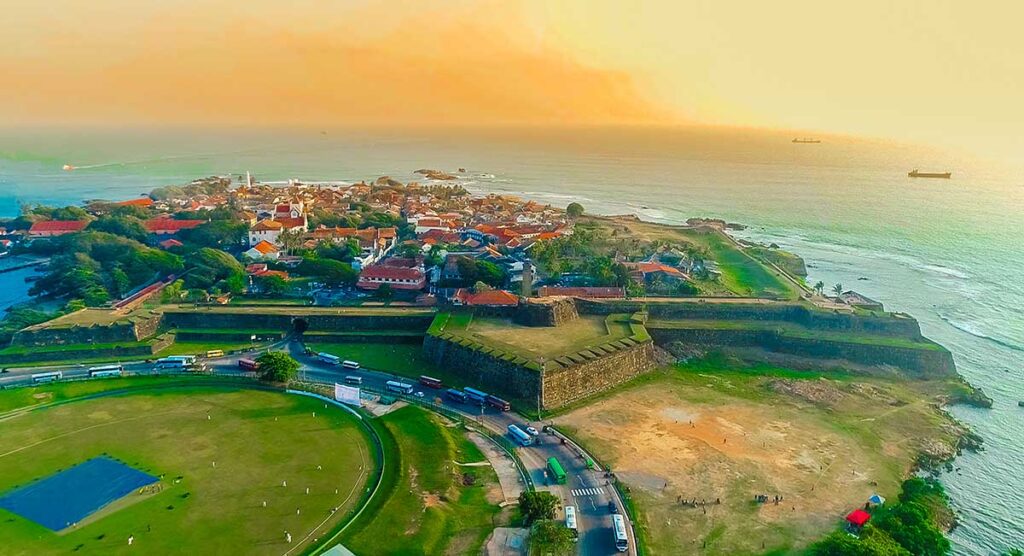
Stepping into the Galle Fort is like stepping through a portal into another century. This UNESCO World Heritage site, located on the southwest coast of Sri Lanka, is a rare and beautiful fusion of European colonial architecture and South Asian traditions. Originally built by the Portuguese in 1588 and extensively fortified by the Dutch in the 17th century, it is not merely a monument of the past—it is a “Living History” sanctuary where the salt air of the Indian Ocean mingles with the scent of spices and the echoes of centuries of trade.
The Ramparts: A Sentinel Against the Ocean
The most iconic experience within the fort is walking the massive stone ramparts. These thick walls have stood as silent guardians for nearly 450 years, surviving the tides of war and the forces of nature. As you walk along the top of the fortification, the Indian Ocean crashes violently against the coral-encrusted base below, sending spray into the air.
At the “golden hour,” the ramparts become the heartbeat of the city. Locals and travelers alike gather to watch the sun dip below the horizon, casting a deep amber glow over the bastions. It is a moment of profound spiritual wellness, where the sheer scale of the stone walls and the infinite blue of the sea remind you of the enduring nature of human craftsmanship.
Heritage Streets: The Soul of the Fort
Inside the walls, the grid-like streets are a maze of discovery. The architecture—a blend of Dutch gables and British verandas—has been meticulously preserved. Today, these heritage streets are home to:
Boutique Galleries: Featuring contemporary Sri Lankan art and hand-woven textiles.
Spice Shops: Where the aroma of Ceylon cinnamon and cardamom reminds you that you are in the heart of the historic Spice Route.
Artisanal Gelaterias: Offering a modern, cooling treat as you wander past century-old courtyards.
The charm of Galle lies in its multiculturalism. You will pass a white-washed mosque, a neo-Gothic church, and a Buddhist temple all within a five-minute stroll, illustrating the peaceful coexistence that defines the fort’s modern identity.
The Lighthouse: A Beacon of Navigation
Standing tall at the edge of the Point Utrecht Bastion is the Galle Lighthouse. This pristine white beacon is perhaps the most photographed landmark in Sri Lanka. For generations, it has guided sailors through the treacherous reefs surrounding the bay. Standing at its base, looking out toward the horizon, you feel the weight of the maritime history that built this city.
Maritime Legacy: The History Beneath the Waves
While the fort offers a walk through history on land, its story continues deep beneath the surface of the sea. The waters surrounding Galle are a graveyard of ancient shipwrecks, from wooden merchant vessels of the Dutch East India Company (VOC) to iron-hulled steamers of the British era. These wrecks have become vibrant artificial reefs, encrusted in coral and teeming with life, serving as “hidden museums” of the maritime silk road.
To truly understand Galle, you must explore its “Silent History.” Sri Lanka Diving Tours are the island’s experts in heritage diving. Our professional instructors and guides specialize in taking you to these historic sites, where you can witness the fusion of human history and marine biology. Whether it is the wreck of the SS Rangoon or the scattered anchors of ancient traders, we provide a safe and intellectually enriching gateway to the deep.
Transition from the stone ramparts of the fort to the coral gardens of the ocean floor. Secure your historic dive excursion today and discover the secrets that the Indian Ocean has kept for centuries.
Visit our place and book your adventure: srilanka-divingtours.com