
Sea Turtle Conservation: Meeting the Guardians of the Reef
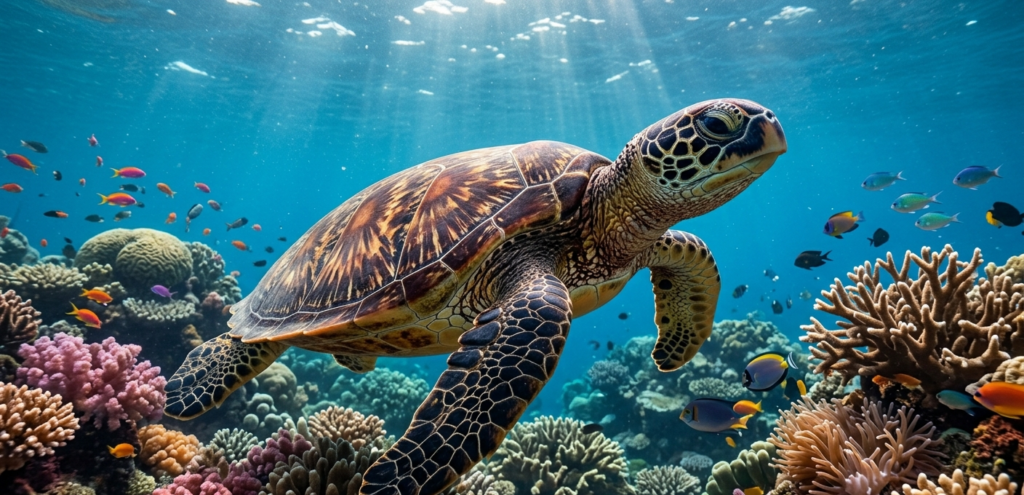
Sri Lanka is one of the few places on Earth where you can witness five out of the world’s seven species of sea turtles returning to the same shores where they were born. These ancient navigators are more than just a beautiful sight; they are the “Guardians of the Reef,” maintaining the health of seagrass beds and coral systems.
As eco-conscious travel grows, understanding how to interact with these gentle giants is vital for their survival.
Meet the Locals: The 5 Species of Sri Lanka
| Species | How to Identify | Status |
| Green Turtle | Large, heart-shaped shell; known for being the most common visitor. | Endangered |
| Hawksbill Turtle | Distinctive “beak-like” mouth and a beautiful, serrated shell. | Critically Endangered |
| Olive Ridley | The smallest species with an olive-green, heart-shaped carapace. | Vulnerable |
| Loggerhead | Recognized by its massive head and powerful jaws. | Vulnerable |
| Leatherback | A true giant; it has a leathery, ridged skin instead of a hard shell. | Vulnerable |
Ethical Encounters: How to Swim with Turtles
Swimming with a sea turtle is a bucket-list experience, but doing it wrong can cause them immense stress. Follow these “Guardian Rules”:
Keep Your Distance: Always stay at least 3 meters (10 feet) away. Never block their path to the surface, as they need to breathe air.
Look, Don’t Touch: Touching a turtle can transfer bacteria, damage their protective mucus layer, or cause them to flee in panic.
No Flash Photography: Their eyes are highly sensitive to light. Use natural light for those stunning underwater shots.
Skip the Feed: Feeding turtles disrupts their natural foraging habits and makes them dependent on humans.
Spotlight: Local Hatcheries & Conservation
Sri Lanka’s coastline—from Hikkaduwa to Kosgoda—is dotted with community-led hatcheries. These centers play a critical role by:
Protecting Nests: Moving eggs from high-traffic beaches to secure, sandy enclosures to protect them from predators and poachers.
Education: Teaching locals and tourists alike about the dangers of plastic pollution and light pollution (which confuses hatchlings).
Rehabilitation: Caring for “bubble butts” (turtles with buoyancy issues) or those injured by fishing nets.
Be a Part of the Solution
Conservation starts with us. By choosing ethical tour operators and supporting legitimate hatcheries, you ensure that the “Guardians of the Reef” continue to patrol Sri Lankan waters for generations to come.
Ready to explore the underwater world responsibly?
Plan Your Eco-Friendly Adventure with Sri Lanka Diving Tours