Exploring the Deep: Recreational vs. Technical Diving
The ocean covers more than 70% of our planet, yet much of it remains a mystery to the average person. For those who choose to venture beneath the waves, diving offers two distinct pathways to exploration: Recreational and Technical diving. While both share the same foundation of buoyancy and breathing underwater, they represent very different approaches to the marine world.
Recreational Diving: The Joy of Exploration
Recreational diving is the most common form of the sport. It is designed for wonder, relaxation, and ease of access. Governed by “no-decompression” limits, recreational divers stay at depths where they can safely swim directly to the surface at any time should an issue arise.
- Depth Limits: Usually capped at 40 meters (130 feet).
Equipment: Standard kit includes a single tank, a BCD (Buoyancy Control Device), and a primary and backup regulator.
The Experience: This is about vibrant coral reefs, schools of tropical fish, and clear, sunlit waters. It is accessible to almost anyone with a basic level of fitness and a passion for the sea.
Technical Diving: Pushing the Boundaries
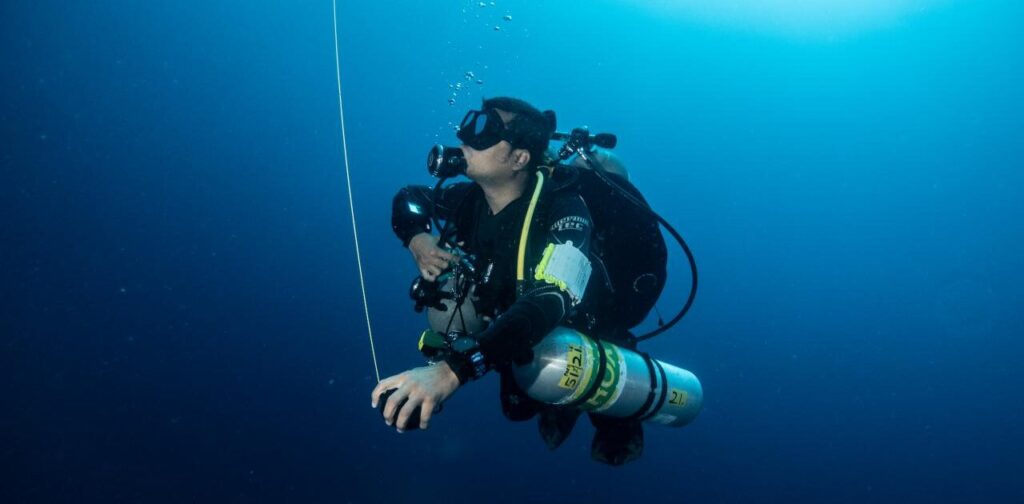
Technical diving (or “Tec” diving) begins where recreational diving ends. It is defined by “staged decompression,” meaning divers cannot simply swim to the surface. They must perform several stops on the way up to allow their bodies to offgas nitrogen safely.
Depth & Environment: Tec divers go beyond 40 meters or enter overhead environments like deep caves and the interiors of shipwrecks.
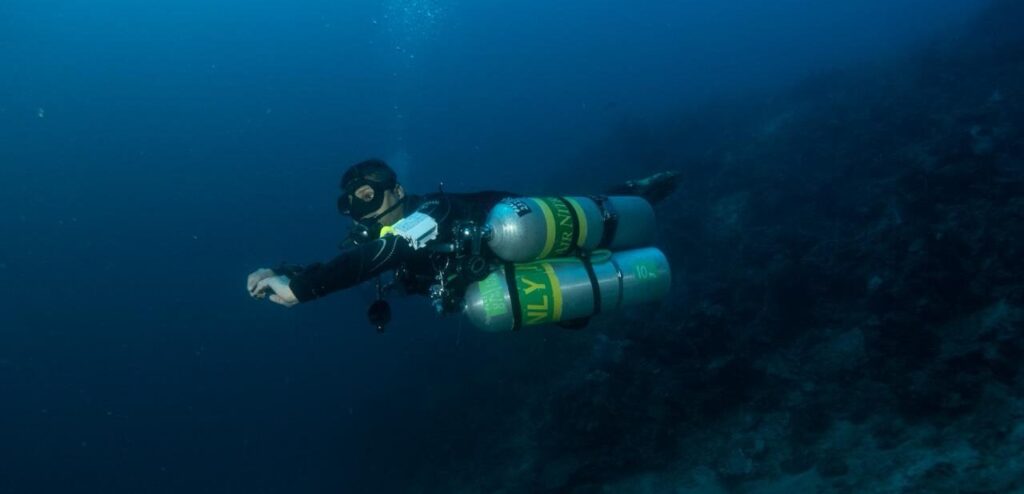
Equipment: This requires specialized gear, including twin cylinders (doubles), “stage” tanks for different gas mixes (like Nitrox or Trimix), and redundant systems for every piece of equipment.
The Mindset: Technical diving is highly disciplined. It requires advanced training, precise gas management, and a high tolerance for complex problem-solving under pressure.
The Ultimate Challenge: HMS Hermes in Batticaloa
To understand the bridge between these two worlds, one look at the HMS Hermes in Batticaloa, Sri Lanka, is all it takes.
The HMS Hermes was the world’s first purpose-built aircraft carrier. Sunk during World War II by Japanese aerial attacks in 1942, she now rests on the sandy seabed off the eastern coast of Sri Lanka. This site is widely considered one of the “crown jewels” of wreck diving globally.
The Dive Experience:
Resting at a depth of approximately 44 to 53 meters, the HMS Hermes is primarily a Technical Diving site. Because it sits past the 40-meter recreational limit, divers must be certified in decompression procedures to explore her massive hull and the life that now calls it home.
Divers who make the descent are treated to a hauntingly beautiful sight. The ship lies on her port side, covered in black corals and teeming with large groupers, tuna, and barracuda. Exploring the Hermes isn’t just a dive; it is a journey through naval history, requiring the precision and equipment of a technical diver to truly appreciate its scale.
Which Path is Right for You?
Whether you prefer the sun-drenched reefs of a recreational excursion or the silent, historical depths of a technical wreck dive, the underwater world has something for everyone. If you are a recreational diver looking to level up, the wrecks of Sri Lanka provide the perfect motivation to begin your technical training.
For those looking to plan their next underwater adventure or seeking more details on diving the historic HMS Hermes, visit Sri Lanka Diving Tours for more information.